What you need to know now about moving to Colorado Springs:
- The Blunt Reality: Colorado Springs is a phenomenal, highly desirable place to live for families and outdoor enthusiasts, but the soaring 2026 median home price of $540,000 means buying a generic, cookie-cutter house often leaves high-end buyers disappointed.
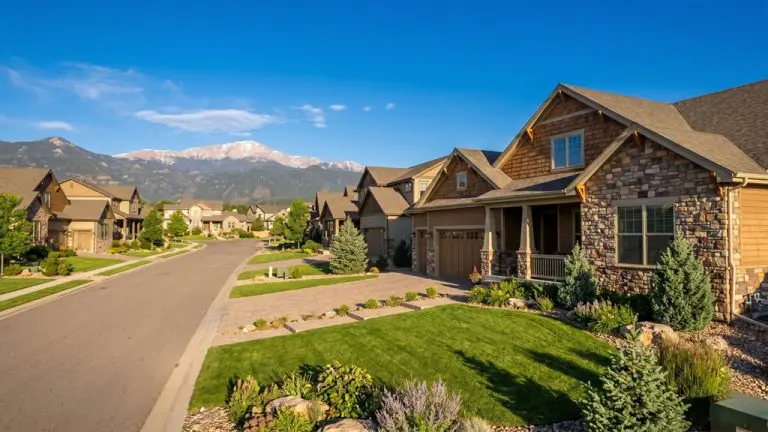
- The Neighborhood Divide: Where you land changes your daily existence; production suburbs like Briargate offer safety but lack architectural soul, while custom enclaves like Flying Horse North and Winsome offer the acreage and Pikes Peak views that luxury buyers expect.
- The Custom Build Advantage: Land availability is still incredibly real in El Paso County, making building custom the smartest way to guarantee proper school districts, climate-resilient engineering, and optimal mountain lot orientations.
Colorado Springs is growing at roughly 0.57% per year, and the people arriving here are not moving blind. They’ve done their research. They know about the mountains, they’ve seen the photos of Garden of the Gods, and they’ve heard the pitch.
What they often don’t know is what life actually looks like once they arrive.
This guide is the honest version. The pros are real. The trade-offs are real. And for families planning to build here rather than just rent temporarily, a few things are worth knowing before you commit.
Is Colorado Springs a Good Place to Live?
Colorado Springs is a genuinely good place to live, especially for families, outdoor enthusiasts, and people who want mountain access without paying Denver prices. The city has a 2026 population of roughly 497,000, a median household income of $84,818, and some of the lowest utility costs in the country. You’ll have a better experience if you understand the trade-offs before you sign a lease or a lot contract.
The city is Colorado’s second-largest and growing steadily. According to U.S. Census Bureau data, Colorado Springs has added more than 16,000 residents since 2020. The pace hasn’t let up.
What Is the Cost of Living in Colorado Springs?
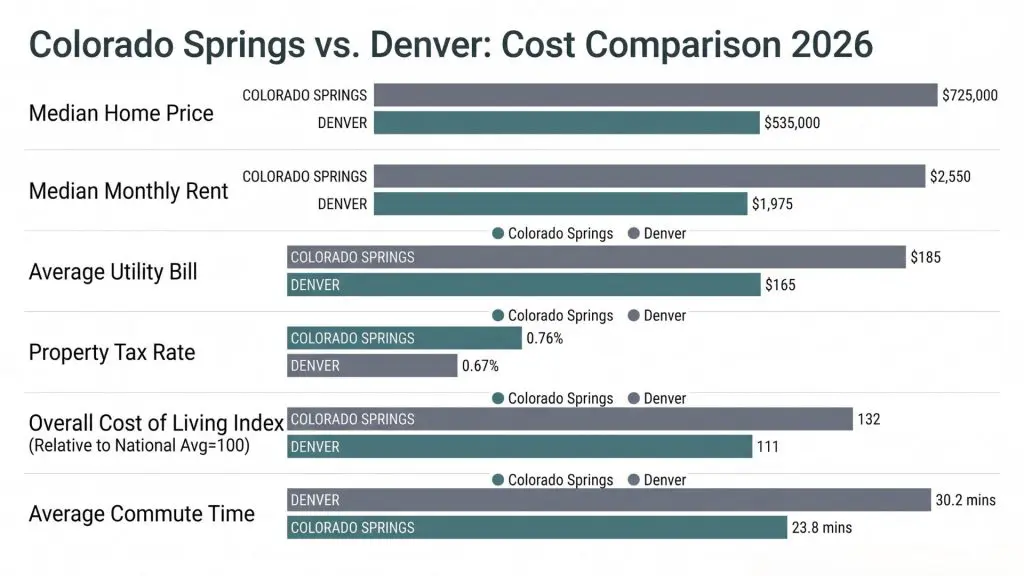
Colorado Springs costs about 2% more than the national average overall, but utility costs run roughly 20% below the U.S. average, which offsets housing expenses significantly. According to Council for Community and Economic Research (C2ER) data published March 2026, housing in Colorado Springs runs about 7% above the national average, while utilities and healthcare come in below the U.S. norm.
The real number people get surprised by is housing. According to Pikes Peak Association of Realtors data reported by the Colorado Springs Gazette, the median sale price for single-family homes in the Colorado Springs area was $475,000 in March 2026. To afford that comfortably at 30% of income, you need household income around $114,000.
That’s a hard number for a lot of people.
The silver lining is that Colorado Springs still runs 7.5% to 11% cheaper than Denver overall, and the gap is biggest in housing.
Cost of Living Breakdown: Colorado Springs vs. National Average
| Category | COS vs. National Avg | Notes |
|---|---|---|
| Housing | +7% | Median home $540K in 2026 |
| Utilities | -20% | Biggest savings category |
| Healthcare | -4% | Below U.S. average |
| Groceries | +3% | Slightly above average |
| Transportation | Comparable | No light rail; car-dependent |
| Overall | +2.1% | Per C2ER, March 2026 |
What Neighborhoods Should I Consider in Colorado Springs?
Pick the wrong neighborhood and Colorado Springs is a mediocre suburban experience. Pick the right one and it’s one of the best places to raise a family west of the Mississippi. Locals who live downtown describe a completely different city than residents of the northern fringe.
Downtown and Near-Downtown
Old Colorado City and the core downtown area have the walkability and character the rest of the city lacks. You can bike to Palmer Park, access restaurants without a 20-minute drive, and feel like you’re in an actual urban neighborhood.
Older housing stock. Smaller lots. Still the most interesting part of the city.
Briargate and the North End
Here’s the honest take on Briargate: it is fine. Schools are good, roads are wide, and every chain restaurant you’ve ever seen has a location within two miles. If you’re coming from a true city and spending serious money on a home, building production-style in Briargate is an architectural step backward. You’ll have a nice house in a sea of nice houses that all look like they came from the same 12 floor plan options.
For families who want predictability, school quality, and don’t care about walkability: Briargate delivers exactly what it promises.
For a custom home buyer? Build somewhere else.
Flying Horse and Flying Horse North
This is where custom homebuilding makes the most sense. Flying Horse North sits at the northern edge of the city, with custom lots backing up toward the Front Range. The community has a golf course, significant lot sizes, and mountain views that earn their own mortgage premium.
Black Forest and Monument
North of the city proper, these areas offer 2.5 to 5-acre rural lots with ponderosa pines, actual quiet, and close proximity to Colorado Springs amenities. Monument (El Paso County) appeals to buyers who want acreage without full rural isolation.
Winsome
One of the newer luxury communities, Winsome offers custom homesites with panoramic mountain views and a quieter feel than Flying Horse. JS Luxury Homes has deep roots here, having built multiple award-winning homes in the community.
Custom homebuilding in these communities requires knowing the lot, the covenants, and the HOA rules inside and out. We’ve built in Flying Horse North, Winsome, and across the Pikes Peak region for years. See where we build and the communities we know best. →
What Is the Outdoor Access Actually Like?
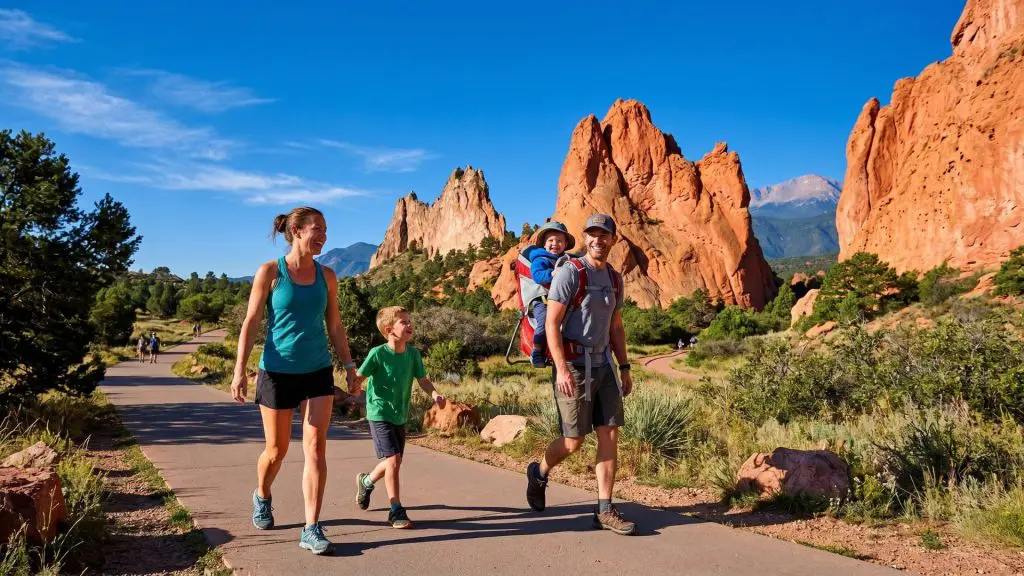
Exceptional. This is the part that tends to hold up to the hype. According to the City of Colorado Springs 2025 Parks, Recreation and Cultural Services Annual Report, residents made 22.5 million visits to parks, trails, and open spaces in 2025 alone. The city manages 326 miles of trails across 18,675 acres of parkland.
Garden of the Gods is rated the #1 U.S. park by TripAdvisor. Pikes Peak summit access is 20 minutes from most neighborhoods. The Manitou Incline, Seven Bridges Trail, and Red Rock Canyon Open Space are all within a 15-minute drive of downtown.
For people relocating from flat or landlocked metro areas, the access changes how you use your time. You end up hiking on a Tuesday. You run trails before work. That shift happens faster than most people expect, and it tends to stick.
The Climate Factor and What It Does to Your House
The altitude sits at 6,035 feet. People coming from sea-level cities underestimate what that does to the body in the first few weeks and what it does to a house over the first few years.
- Expect to feel winded on stairs for a week or two after arriving.
- The UV index here regularly hits “Very High” or “Extreme” in summer. That means a cheap big-box exterior sealer on a deck will fail in three seasons. Use a penetrating oil product rated for high-altitude UV if you want your investment to last.
- Low humidity sounds pleasant until your drywall starts cracking. A whole-home humidifier is not optional in Colorado Springs. It’s standard practice.
- If you’re finishing a garage or adding a workshop, budget for a vapor barrier. Snow-melt runoff from cars in winter combined with the freeze-thaw cycle will corrode tools and equipment stored directly on an unsealed slab.
Colorado Springs gets an average of 300+ sunny days per year. Summers top out in the low 80s and rarely feel oppressive. Winters have snow but it melts within a day or two in most years. The city runs warmer and drier than Denver.
No mosquitoes. No cicadas. No fire ants. People who move from the South mention this within the first week and never stop being grateful about it.
What Are the Schools Like in Colorado Springs?
School quality varies sharply by neighborhood and district.
District Overview
| District | Notable Feature | Best For |
|---|---|---|
| Academy District 20 | Consistently top-rated in state | Families in north COS, Briargate, Flying Horse |
| Cheyenne Mountain District 12 | Strong academics, smaller class sizes | Families near Broadmoor/south COS |
| Colorado Springs District 11 | Largest district; highly variable | Families near downtown; research specific schools |
| Falcon District 49 | Growing quickly with new developments | Families in east COS and newer subdivisions |
Academy District 20 is the one families specifically relocate to get their kids into. If schools are the deciding factor in where you build or buy, understand the district lines before you commit to a lot.
Families building multigenerational homes are one of the fastest-growing segments in the Colorado Springs market. Separate entrances, shared common spaces, private suites. We’ve designed floor plans that actually work for this. See our guide to multigenerational home plans and layouts. →
What Is the Job Market Like?
The job market has a structural quirk: the military and defense sector dominate. Peterson Space Force Base, Fort Carson, Schriever Space Force Base, and NORAD/USNORTHCOM together employ a significant portion of the workforce.
If you’re in defense, aerospace, cybersecurity, or healthcare, Colorado Springs is a strong market. Outside those sectors, it gets thinner. Remote workers and people who can bring their income with them consistently report the best outcomes here.
The city has been actively recruiting technology and business headquarters in recent years, and there’s optimism about diversification. But that’s still in progress.
For families building a custom home here, this matters. The people who struggle in Colorado Springs tend to be those who moved without a job offer or income source that doesn’t depend on local employers.
Planning to build a custom home in Colorado Springs? The cost-to-build conversation starts with a clear picture of land, scope, and finishes. Read our in-depth breakdown of what custom homes actually cost in Colorado Springs. →
What Does Moving to Colorado Springs Feel Like the First Year?
People come here for the mountain access and the idea of the West. Most of them stay for reasons they didn’t fully expect.
The outdoors really do become part of daily life. You end up hiking on Tuesdays after work. The air quality is noticeable after years in humidity. Traffic is real but it’s not Dallas real or Denver real.
The social side takes longer. Colorado Springs has a transient population partly because of the military rotation cycle, which means friendships take more intentional effort to build. People who actively seek out community tend to do fine. People who wait for the city to bring the city to them often find it isolating.
The food scene is the most consistent complaint. It’s improving, but it’s not Denver. If restaurants are a major part of your lifestyle, adjust expectations accordingly. The beer scene is notably better than the food scene.
The political environment leans conservative, but the city has been diversifying over the past decade. Downtown and certain northern neighborhoods feel noticeably different from the outer suburbs in this regard.
Most people who give it 18 months and land in the right neighborhood come to love it.
What Makes Colorado Springs Stand Out for Custom Home Buyers?
For the right buyer, Colorado Springs is close to an ideal scenario for building.
Land availability is still real here in a way it isn’t in Boulder or Denver. The custom home lot market has been tighter in recent years, but communities like Flying Horse North and Winsome still have buildable sites with mountain views.
Building custom means getting the right school district. It means choosing your lot orientation to maximize Pikes Peak views. It means designing for the altitude and the sun load, which affects everything from window placement to HVAC sizing.
JS Luxury Homes has been building custom homes in Colorado Springs since 2008. The 2023 Colorado Springs Parade of Homes named our Cheyenne Plan winner of Best Master Suite, Best Interior Design, Best Floor Plan, Best Kitchen, and Best Overall Home. In 2026, we were recognized as a Bronze winner in the Best of the Springs for Custom Home Builder.
Those awards matter, but they’re not why people build with us. They build with us because they want someone who knows this market, knows these communities, and won’t disappear after the contract is signed.
Every custom home we build follows a seven-step process: Initial Meeting, Professional Agreement, Budgeting, Contract, Permitting, The Build, and Warranty. No surprises, no handoffs to people you’ve never met. See exactly how our process works, start to finish. →
How to Relocate to Colorado Springs: A Step-by-Step Guide

Most people spend more time planning a camping trip than a cross-state move. Here is how to do it right the first time.
Step 1: Decide Whether You’re Renting or Buying Before You Visit
If you have kids in school, are switching careers, or have never lived in Colorado before, rent for 6 to 12 months in the neighborhood you think you want. The cost of a lease you walk away from is far lower than the cost of selling a home in the wrong school district two years from now. If you’re fully remote, have visited multiple times, and have a clear target area, buying immediately makes sense.
Step 2: Visit in February, Not July
Every city looks good in summer. Colorado Springs looks spectacular in summer. The real test is a February visit: does the commute still feel manageable when Powers Boulevard is icy at 7am, and does the neighborhood still feel right when the mountains aren’t putting on a show? If you visit in February and still want to move there, you’re making a real decision.
Step 3: Drive Your Commute at Rush Hour Before You Choose a Neighborhood
Colorado Springs has no light rail and no meaningful public transit. The north-south corridor moves fine; east-west crossings at rush hour can add 20 to 30 minutes to a trip that looks short on a map. Drive the actual route at the actual time you would drive it, not on a Saturday or at 2pm, before you fall in love with a neighborhood.
Step 4: Transfer Your Vehicle Registration and Driver’s License Within 90 Days
Colorado law requires new residents to get a Colorado driver’s license and register their vehicle within 90 days of establishing residency. Bring your out-of-state license, proof of Colorado residency, and your vehicle title to the DMV. Budget $400 to $900 for first-year registration depending on vehicle value, and expect a short emissions test at any certified station before plates are issued.
Step 5: Update Your Address With USPS, the IRS, and the State Voter Roll
Set aside two hours in your first week to forward mail through USPS, file IRS Form 8822 with your new address, and update banks, HR, and subscription services. Voter registration in Colorado can be completed online through the Colorado Secretary of State’s portal. Update it early so mail ballots reach your new address before the next cycle.
Step 6: Set Up Colorado Springs Utilities Before Move-In Day
Colorado Springs Utilities handles electric, gas, water, and wastewater for addresses inside city limits. Transfer service at least five business days before your move-in date at csu.org. Expect electric bills of $80 to $120 per month, natural gas bills of $150 to $250 in winter, and higher water bills in summer if you run outdoor irrigation. Homes in Black Forest, Monument, and unincorporated El Paso County use private well and septic or smaller district providers, so confirm your utility situation before closing.
Step 7: Prepare Your Home for the Altitude and UV Before You Need To
Standard big-box deck sealers fail in two to three seasons under Colorado’s UV index. Use a penetrating oil product rated for high-altitude exposure and reseal any older deck within the first year. Low humidity causes wood trim, hardwood floors, and cabinetry to shrink in winter, so a whole-home humidifier on your HVAC is maintenance here, not an upgrade. If buying, hire an inspector who knows Colorado Springs construction specifically; expansive clay soil causes foundation movement that looks subtle on a walkthrough and expensive on a structural report.
Planning to build a custom home in Colorado Springs? The cost-to-build conversation starts with a clear picture of land, scope, and finishes. Read our in-depth breakdown of what custom homes actually cost in Colorado Springs. →
Questions People Have About Moving to Colorado Springs
Does Colorado Springs Have Expansive Soil Problems?
Yes, and it’s a significant factor in custom home construction costs. Large portions of Colorado Springs, particularly the eastern mesa areas and parts of Black Forest, sit on bentonite clay that expands when wet and contracts when dry. This cycle causes foundation heaving, cracked slabs, and structural movement in homes built without proper geotechnical engineering. Any custom build in El Paso County should start with a soils report, which typically costs $1,500 to $3,500 and determines whether a standard foundation or a more expensive pier system is required.
Do Homes in Black Forest and Monument Use Wells and Septic Systems?
Many do, yes. Parcels outside Colorado Springs Utilities’ service area in Black Forest, portions of Monument, and rural El Paso County are served by individual wells and septic systems rather than municipal water and sewer. A new well permit through the Colorado Division of Water Resources and septic approval through El Paso County Public Health add 4 to 8 weeks to the pre-construction timeline and typically add $25,000 to $45,000 to the overall project cost compared to a lot with municipal utility hookups.
What Are the Wildfire Building Code Requirements in Colorado Springs?
Lots in the Wildland-Urban Interface (WUI) zone, which includes portions of Black Forest, Monument, and the western edges of Flying Horse North, require Class A fire-rated roofing materials, approved exterior siding products, fire-resistant deck construction, and defensible space clearing within 100 feet of the structure. These requirements come from El Paso County Land Development Code and Colorado’s WUI Building Code standards. A builder who doesn’t pull the WUI designation before starting your design is skipping a step that affects both your insurance coverage and your permit approval.
How Do Property Taxes Work in El Paso County for New Construction?
Colorado uses an assessment rate applied to actual value, then multiplied by the local mill levy. For residential property in El Paso County in 2026, the assessment rate is 6.765% of actual value. On a $1.2 million custom home, the assessed value is roughly $81,180, and the mill levy in most Colorado Springs zip codes runs 70 to 90 mills, putting annual property taxes at approximately $5,700 to $7,300. That’s low compared to Texas, Illinois, or New Jersey at similar home values, which is part of why custom home buyers relocating from those states are often pleasantly surprised.
Does Altitude Affect Home Construction Materials and Methods in Colorado Springs?
It does, more than most builders from lower-elevation markets account for. UV intensity at 6,035 feet degrades standard exterior sealers and certain roofing adhesives faster than at sea level. Low humidity causes wood framing to shrink slightly after installation, which can create minor gaps at trim joints in the first heating season. Concrete curing behaves differently at altitude and in dry air. Heating system sizing needs to account for the reduced air density. Whole-home humidification is a practical necessity, not a luxury upgrade. A builder experienced in Colorado Springs construction knows these things. A builder who primarily works at lower elevations may not.
What Is the Pikes Peak Regional Building Department and When Does It Matter?
The Pikes Peak Regional Building Department (PPRBD) handles building permits for unincorporated El Paso County, which includes Black Forest, Falcon, and most rural lots outside city limits. Lots inside Colorado Springs city limits go through the City of Colorado Springs Development Services. Knowing which jurisdiction your lot falls under determines where you pull permits, which code editions apply, and how long permit review takes. PPRBD and City Development Services have different review timelines, different fee structures, and different required documentation. Submitting to the wrong one adds weeks to your start date.
Colorado Springs Rewards the People Who Move Here With a Plan
Most cities are easy to move to and hard to love. Colorado Springs is the opposite. The first few months can feel disorienting: the roads, the altitude, the food scene. Then somewhere around month four, you drive home from a hike at sunset with Pikes Peak lit up orange in your windshield and you think: okay. I get it now. That moment comes faster for people who did the work before they arrived.
If you’re building a custom home here, JS Luxury Homes has been doing this since 2008. We’ve won Best Overall Home at the Parade of Homes, hold a BBB Torch Award, and we’ve built in Flying Horse North, Winsome, and Black Forest. We know what each community costs, what each one requires, and what living there actually feels like. If you want to talk through the build side of your move, we’re a good first call.
If you’re planning a move to Colorado Springs and want to understand what the custom home process looks like, we’re happy to walk through it. Contact the JS Luxury Homes team to get started. →